The calculator for men is suitable for an age group from 18 to 80 years. On average, the BMI of a man is 1 point higher than that of women.
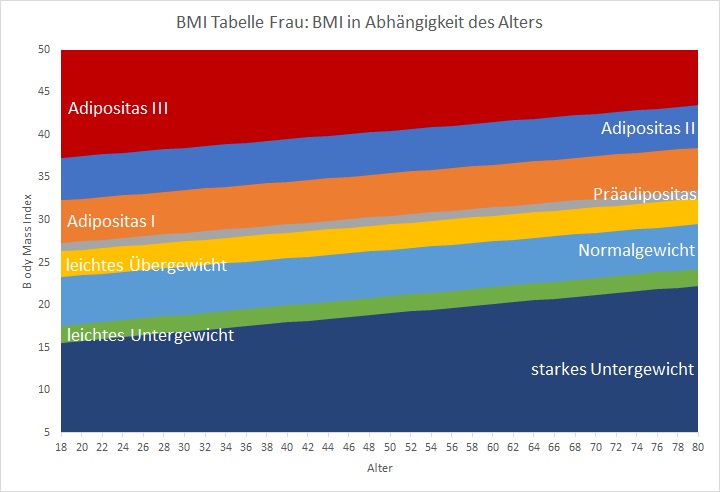
Our calculator, specially designed for women, can be used between the ages of 18 and 80. The average BMI of a woman is slightly lower than that of a man.
The calculator for children is designed for boys and girls from 5 to 18 years. We do not recommend its use for children under the age of 5, as the BMI at this age is subject to relatively large fluctuations.
The BMI is a diagnostic procedure that can provide information about whether a person is underweight, has a healthy weight or is even suffering from overweight or obesity.
Too much weight can lead to various health problems such as type 2 diabetes, high blood pressure and cardiovascular problems.
Underweight can increase the risk of malnutrition, osteoporosis and anemia.
BMI does not measure body fat directly and does not consider age, gender, nationality or muscle mass, even if these factors indirectly affect BMI.
For example, an elderly person who is considered healthy but completely inactive in his daily life may have significant amounts of excess body fat even though he is not actually heavy.
Children can also have a particularly high BMI if they have a strong physique or many muscles instead of unnecessary fat. BMI is therefore not an ideal indicator because it does not directly determine body fat.
Muscles and bones are denser than fat, so an athlete or muscular person often has a higher BMI, but not too much fat.
The body consists of water, fat, protein, carbohydrates and various vitamins and minerals.
Waist circumference and body mass index are indirect methods to assess this body composition.
Although BMI can be useful in testing children and adults for weight problems, it has its limitations.
BMI can overestimate the amount of body fat in athletes and other people with very muscular bodies, as well as underestimate the amount of body fat in older people and other people who have lost muscle mass.